
Know your security camera blind spots before the real night
Sightproof now runs stress drills that test a camera's detector against rare scenes it has no footage for, and counts a miss only when a second vision model confirms the object was visible.
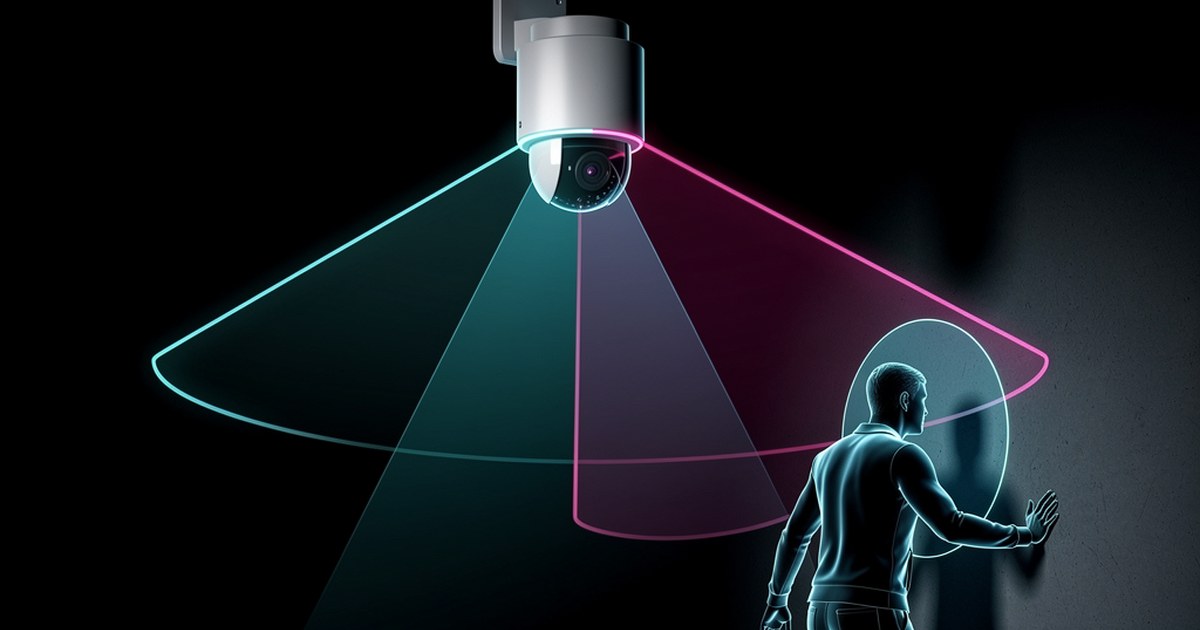
On October 12, 2026, we ran a stress drill on a live camera using the zero-shot detector at its configured threshold. The detector missed three scenes that a second vision model confirmed were plainly visible: a person in a wet courtyard, a dark sedan with its headlights on across a gate, and a person in a doorway. It found one scene. Two other generated scenes were correctly thrown out because they did not actually show the object. The whole drill cost about one cent.
That result is the reason we built the feature. Most security camera blind spots are invisible until something happens, and by then the footage you wish you had does not exist. Sightproof now lets you find those gaps on purpose.
Why security camera blind spots stay hidden
An alert log tells you what a detector caught. It cannot tell you what the detector never flagged. A camera that stays quiet for a month looks the same whether the scene was empty or the model was blind to what passed through it.
The events that matter most are also the ones you rarely have footage of: someone climbing a fence at night, a worker down on the floor, a blocked exit. You cannot measure detection on events you have never recorded. Teams usually find out how well a camera handles them during the real incident.
Lighting, weather, camera angle and distance all change what a detector can see. A threshold that works on a bright loading dock in daylight may not work on a wet courtyard at night. Without a test, you are guessing.
How a Sightproof stress drill works
A stress drill generates synthetic CCTV-style frames for rare security and workplace safety scenarios, such as a night fence climb or a worker down. It then runs those frames through the camera's detector exactly as configured. Nothing is tuned for the test, so the drill reflects what that camera would actually do.
The output is a miss report that shows which rare scenes the camera would not see. Scenarios include a night fence climb, a worker down and a blocked exit.
The detector under test is whichever one the camera is set up with. Sightproof detects objects zero-shot with OWL-ViT, or with a customer's own fine-tuned model. The drill checks the setup you have, not a generic benchmark.
Why a miss only counts when a second model confirms it
Generated images are imperfect. A scene prompted as "person climbing a fence at night" may come back with no person in it, or with one too obscured to count. If the drill scored that as a detector failure, the miss rate would be inflated and you would chase problems that do not exist.
So Sightproof adds a check. A drill scenario is counted as a miss only when a second-look vision check confirms the expected object was visible in the scene. Scenes where the object never appears are marked separately and excluded from the miss rate.
This is what happened in the October 12 drill. Two generated scenes were discarded because they did not show the object, so they did not count against the detector. The three misses that did count were ones the second model confirmed were plainly visible.
The result is a number you can defend. When the report says the camera would miss a scene, a second model has already agreed that the object was there to be seen.
Reviewing what the camera actually saw
A miss rate is easier to act on when you can look at the evidence. Drill frames captured during security drills are now stored in platform storage and can be viewed from the app, so you can review what a camera actually saw.
If a frame cannot be uploaded, that failure is recorded rather than hidden. A drill that quietly dropped frames would understate the problem, and you would not know it.
In practice, reviewing a miss tells you which kind of problem you have:
- A threshold problem: the object is clear, and the detector's confidence sits just under the cutoff.
- A conditions problem: darkness, rain or glare make the object hard for this camera to read.
- A model problem: the object is clear and well lit, and the detector still does not recognize it.
These call for different fixes. The first is a configuration change. The second may be a camera placement or lighting question. The third points toward a model trained on your own scenes. Sightproof can fine-tune object detection models on a customer's own camera feeds using LoRA, and on alerts the customer's team has verified from its own cameras.
Keeping simulated footage out of your real data
Synthetic frames are useful for testing and harmful if they leak into the systems you rely on. Sightproof handles this in three ways:
- Every drill frame is clearly marked as simulated.
- Drill frames never become alerts, search entries or training data.
- Drill frames are stored and viewable for review, separate from the live alert flow.
Your alert history stays a record of what cameras really saw, and your training data stays real. A drill cannot trigger a responder at 3 a.m. or teach a model something that never happened.
What a drill does and does not tell you
A drill is a probe, not a guarantee. It tells you which of the scenes it generated your camera would miss. It does not prove coverage of every situation you might face, and a clean report is not a certificate.
What it does give you is a repeatable way to find gaps before an incident does. Because it runs on generated scenes, you do not have to stage a fence climb or ask someone to lie on the floor of a warehouse. At roughly one cent for the October 12 drill, you can check cameras one at a time rather than choosing a few to test.
The drill also fits alongside the rest of the Sightproof workflow. Alerts carry severity, with acknowledgement and escalation. They can be grouped into incidents with assigned responders and tracked resolution. A drill covers the earlier question of whether the camera will produce an alert at all.
Next step
Pick one camera that watches something you cannot afford to miss, such as a perimeter gate, an exit route or a lone-worker area. Run a stress drill on it, open the miss report and look at the frames. If the detector missed scenes that a second model says were plainly visible, you have found a blind spot while it is still cheap to fix.
To see how drills fit into your setup, start with the Sightproof product page and ask for a walkthrough on one of your own cameras.