Blog
Field notes on sovereign AI, agent teams and the RiseLab products — what we shipped, how it works and what it changes for government contractors, sales and operations teams.
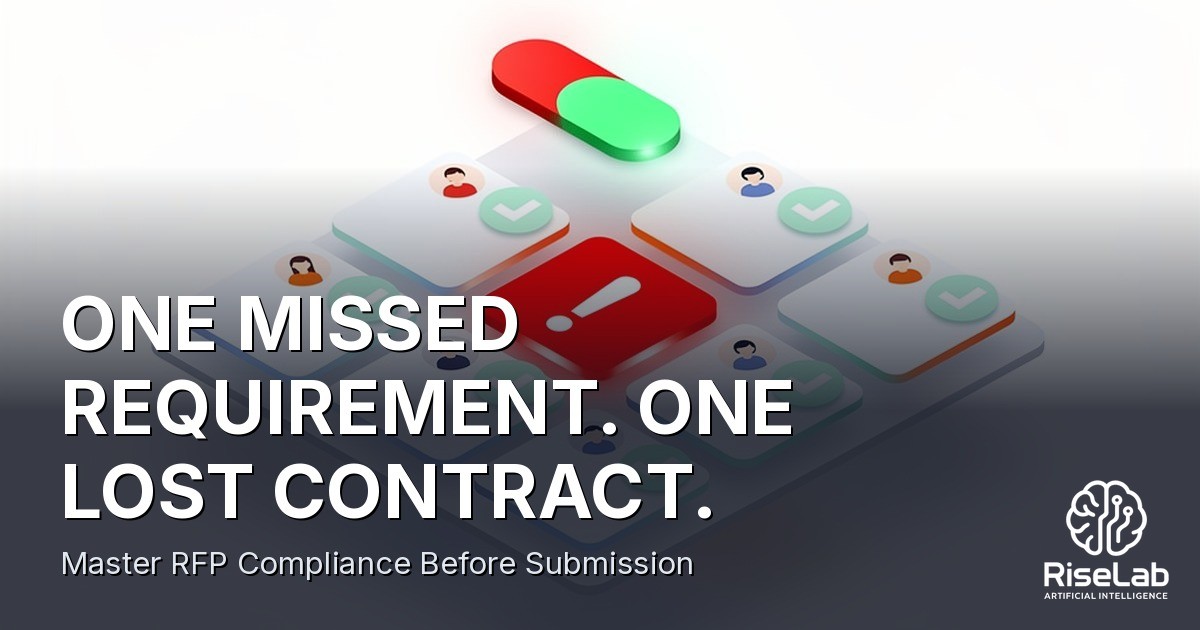
Proposal Compliance Matrix: Build One That Survives Evaluation
A proposal compliance matrix is only as good as the evidence behind each row. Here is how to build one that holds up under evaluation, and where RFP Copilot takes on the tedious parts while people keep the decisions.
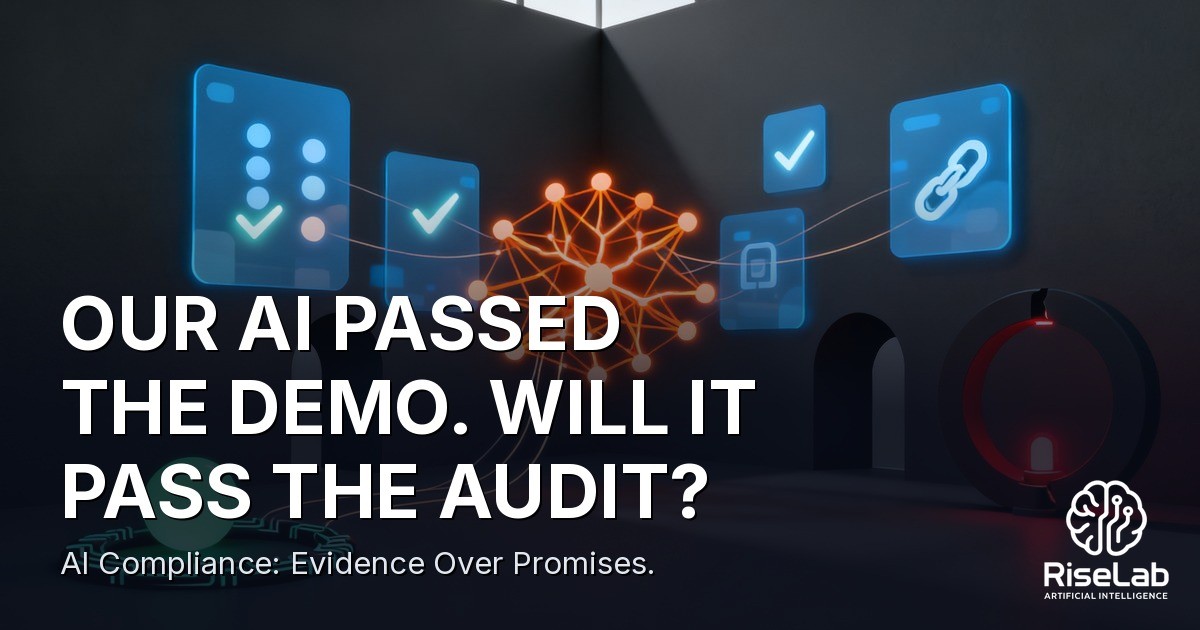
AI Compliance for Financial Services: What Examiners Will Test
Examiners apply existing model risk and third-party frameworks to AI tools, so the vendor with the best evidence wins, not the best demo. Here is how to test for that evidence and where RiseLab fits.
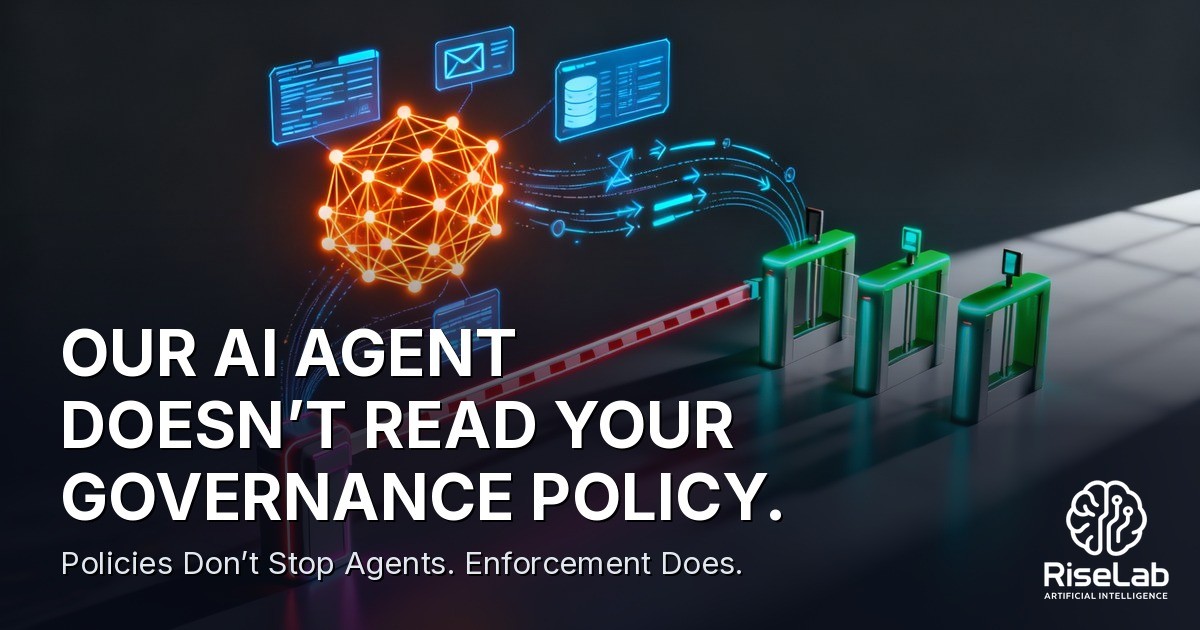
AI Agent Governance: Closing the Gap Between Policy and Practice
Most governance frameworks say who should be watching an AI agent. They rarely say what the platform does while nobody is looking. Here is a practical way to build enforcement into the execution path.

AI Vendor Evaluation for Banks: A Compliance Scorecard
Most AI pilots at banks stall in security review because nobody turned regulatory expectations into testable vendor questions. Here is a practical scorecard, and where RiseLab's documented capabilities fit.
Go/No-Go Decision: How to Gate Pilots and Bids on Evidence
Most stalled AI pilots and weak bids share one root cause: nobody forced a real go/no-go decision. Here is a gate built on pass/fail criteria and evidence-backed scores, and where RiseLab produces that evidence.
Government Contract Proposal Workflow for GovCon Teams
A government contract proposal is judged on compliance and evidence before it is judged on prose. Here is a five-step workflow GovCon teams can use, and where RFP Copilot fits at each step.
PII Redaction for AI: A Practical Pipeline Guide
Most AI pilots stall on one question: what personal data reaches the model? This guide covers how to detect, transform and validate PII before ingestion, and which parts RiseLab handles.
AI Audit Trail: What Compliance Reviewers Actually Ask For
Most AI pilots stall in security review because application logs can't answer a reviewer's questions. Here is what an AI audit trail needs to contain, the gaps that fail reviews, and where RiseLab fits.
HIPAA Compliant AI Chatbot: What Security Review Checks
No model is HIPAA compliant on its own. Here is what a security reviewer checks in a deployment, and where platform controls like redaction, approvals and audit trails help you answer.
Fine-Tune LLM on Your Own Documents Without Failing Review
Training a model on sensitive internal files is the easy part. The hard part is the data prep, testing and audit trail that let it survive a security review. Here is a practical path, and where RiseLab fits.
LLM Data Privacy Controls That Survive a Compliance Review
Most LLM pilots stall in compliance review because nobody can point to a control that answers a specific question. Here is how to build LLM data privacy controls a reviewer can inspect, and where a platform helps and where it does not.

GAO Bid Protest Readiness: Build a Proposal That Survives Review
A GAO bid protest is decided largely on the written record, so the work that protects you starts long before anyone files. Here is how proposal teams can build a defensible record with RFP Copilot.
Go/No-Go Decision Criteria for AI-Enabled Proposals
When a bid depends on AI, your go/no-go decision criteria need gates for the AI stack itself. Here is how to run them, and where a platform like RiseLab fits.
AI Governance Framework: Evidence Reviewers Actually Check
Security reviewers judge your controls, not your model. Here is how to build an AI governance framework around evidence, extend it to agents, and separate what a platform enforces from what you must own.
Gov Contract Proposal Software: 5 New Tools for Small Firms
RFP Copilot shipped five updates in October 2026 that matter to small government contractors: a staffing check, a promise tracker, a more capable Pursuit Agent, sharper bid reviews and an anonymized data pool. Here is what each one does and why it matters.
African Language Translation: Benchmarks You Can Check
RiseLab now shows how translation models perform on French and Lingala, Swahili, Kikongo and Tshiluba. Here is what the benchmark measures, how to read it, and how to use it in a model decision.
Find Your Camera Blind Spots Before the Real Night
Sightproof stress drills run simulated rare-event scenes through a camera's detector exactly as configured and report what it would miss. A miss counts only when a second vision model confirms the object was in the scene.

Know your security camera blind spots before the real night
Sightproof now runs stress drills that test a camera's detector against rare scenes it has no footage for, and counts a miss only when a second vision model confirms the object was visible.
Multi-Agent Governance for Mid-Sized Businesses
When AI agents share a knowledge base, one bad entry can steer every agent that reads it. Here is a practical, mid-sized-business plan for multi-agent governance.
Warehouse security cameras: meet Sightproof, one engine
Physical Security is now Sightproof: one engine with a Security pack available today and a Workplace Safety pack in early access. Here is what that means if you run warehouses.
Multi-Agent Governance: Securing Shared Memory Between Agents
When agents share a knowledge base, one bad write can steer every agent that reads it. Here is how to approach multi-agent governance, and which controls RiseLab covers today.

AI Agent Memory Security: Stop Poisoned Memory From Persisting
Once agents remember things between sessions, a single poisoned entry can misdirect them for weeks. Here is how to approach AI agent memory security, and which RiseLab controls help around the edges.